According to Biscayne Times, on the morning of February 20, 2025, Melanie Oliva walked outside her house on NE 119th Street and watched a tree crew felling the tall pines she had lived under for a decade. She had seen a family of yellow-crowned night herons in those same branches that morning. The village had told residents it would check for active nests before any cutting began. Oliva did not think that had happened, and she said so.
That single morning is worth sitting with, because Biscayne Park spent the next year and a half arguing about it, and the argument still has not closed.
What Fell in January
The trigger was mechanical, not political. An Australian pine came down on its own on January 9, 2025, and the village moved fast. On February 4, the commission approved a contract with Joe's Landscaping and Tree Service to remove, haul, and grind the stumps of 37 Australian pines for up to $120,000. The species is not native to Florida and the state classifies it as a noxious weed, banned from cultivation because it crowds out native plants and topples easily in storms. On paper, removing 37 of them along a shared median with the City of North Miami looked like routine maintenance.
What made it complicated is what those same trees had become in the decades since anyone planted them. They were sheltering active nests. Oliva and her neighbors watched crews take down pines that were, by the village's own account, still healthy and still hosting birds, alongside the ones that were genuinely rotten. A letter from the Village Manager's office acknowledged at least one active nest and said work on that particular tree would wait until the birds had moved on.
A Rule Older Than the Trees in Question
Biscayne Park has called itself a bird sanctuary since 1932, when the village passed an ordinance making it illegal to shoot, trap, or destroy birds within its limits. It is also recognized as a Tree City USA village, a status tied directly to how the community manages its public tree canopy. Those two identities are why a stump-grinding contract turned into a monthslong public fight rather than a line item nobody noticed.
By March, resident pressure had done what the initial notice process had not. The village halted removal of the remaining trees and ordered an assessment to identify which ones still held active wildlife. If the survey found birds, the trees would stay.
The Ordinance That Followed
The pause did not end the conversation. It moved it into an ordinance. At the May 6, 2025 commission meeting, the village took up a proposed Article VIII titled Public Tree Care, meant to formalize how future removals get decided. Public comment ran long and it ran specific. Dori Zimmerman spoke against the ordinance, worried about handing the Village Manager full authority to cut trees, and said she was still waiting for a replacement tree the village had promised her after an earlier removal. Mary Benton, Denise Barros, Carol Respondek, and Joe Moore each went on record against the ordinance as written, with Moore specifically objecting to herbicide use and asking the commission to look at other ways to treat the soil. Robert Boyle spoke in favor of the Australian pines themselves, arguing for what they still offer the local bird population regardless of where they came from.
Commissioner Amsler asked that the Parks and Parkways Board be looped into a workshop before anything came back for a vote, and the commission agreed to combine the tree ordinance item with the Australian Pines item for further discussion. As of that meeting, neither had been resolved. The debate that started with one falling tree in January 2025 is still, more than a year later, a question the village hasn't finished answering: what does a sanctuary protect when the trees doing the sheltering aren't the ones that were supposed to be there in the first place.
Meanwhile, the Week Outside the Log Cabin Hasn't Moved
None of that has touched how residents actually get through a Tuesday. In 2025, the village signed a public transit agreement with the Florida Department of Transportation and launched a partnership with Freebee, a free, on-demand electric shuttle open to all ages, with pets welcome and rides requested through an app. The hours are specific and unglamorous: Sunday through Thursday from noon to 3:15 and again from 4 to 7, Friday and Saturday from 11 to 4:15 and 5 to 9, with every request due at least 30 minutes before closing. It is not a scenic loop. It is a way to get to Publix or the Freebee-listed points of interest without moving a car, running on batteries instead of gas in a village that has spent a year debating what belongs in its canopy.
The Ed Burke Recreation Center's annual calendar has not changed shape either. The same six fixtures repeat every year, in roughly this order:
- Halloween Fun Zone, held the evening of October 31
- Winter Fest
- Movie Night in the Park
- Spring Egg Hunt
- Jazz in the Park
- National Night Out, paired with a Back to School event
National Night Out already happened this year, on August 4, the date the village moved its regular commission meeting to avoid a conflict. The next fixture on the list is Halloween Fun Zone, later this month.
Where the Village Actually Goes at Night
Ask around Biscayne Park about where people actually spend an evening and the answer that keeps coming up is a room that is not technically in the village at all. Luna Star Cafe sits at 775 NE 125th Street, across the line in North Miami, directly opposite the Museum of Contemporary Art. Neighbors treat it as their own anyway. On Nextdoor, it is listed as a Neighborhood Favorite specifically in Biscayne Park, not just in the North Miami business district it actually sits in.
The room runs small and specific. Wednesdays are Song Swap, an open jam where regulars bring whatever they play, horn or drum or guitar, and sit in with each other. The last Friday of the month belongs to a rotating feature act, Slim Glasses this September. One of the cafe's co-owners, Eric King, performs there regularly himself, solo as Paper Trees and in a duo with his brother Scott called The Brothers King. The bar has a long-standing reputation for running cash only, which regulars have simply adjusted around rather than treated as a problem.
During the day, the counterpart is next door in the other direction: Elaine Gordon Enchanted Forest Park, with its trails and small petting zoo, a few minutes from the same streets where the tree assessment is still underway.
What Actually Changes Here
The Log Cabin meetings and the Wednesday Song Swap are happening in the same calendar year, sometimes the same week, and they are not really in conversation with each other. One is a live argument about who decides what stays standing over the next decade. The other is a schedule that has repeated itself long enough that nobody needs to check a flyer to know Halloween Fun Zone means the last night of October. The pines under discussion this fall are the same pines residents already walk past on the way to that Wednesday jam, whether or not the new ordinance passes by winter.
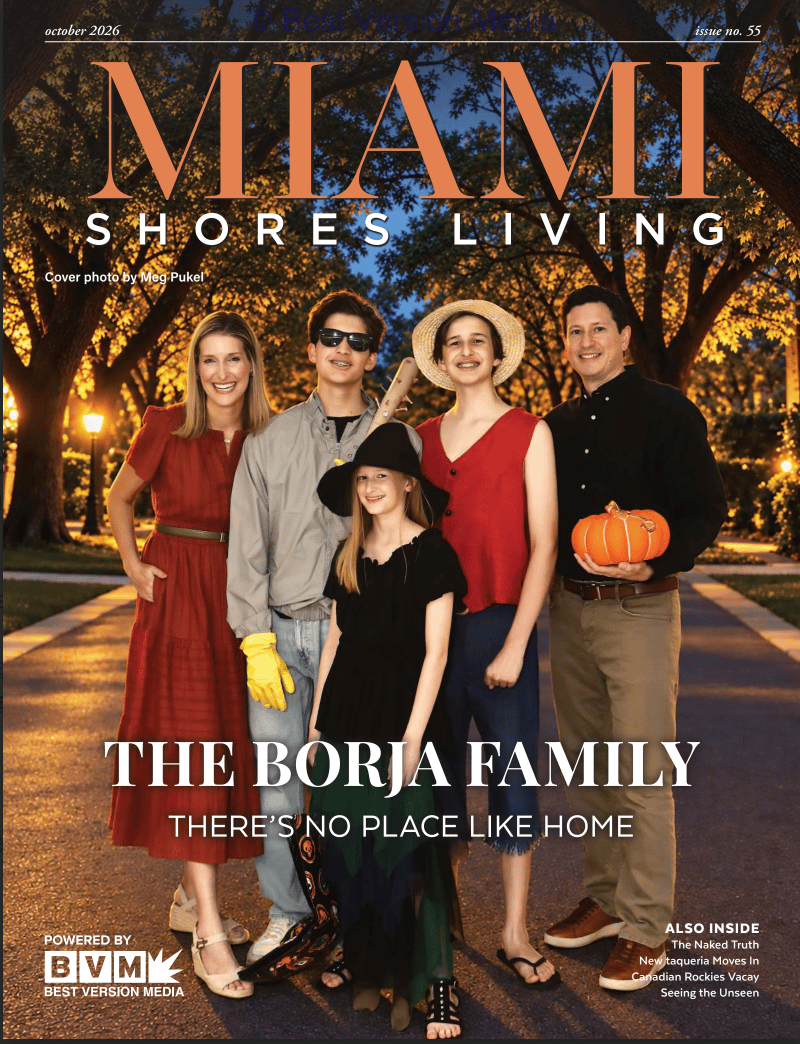
If you're weighing in at the next Log Cabin meeting, or just comparing notes on the Freebee schedule, Kendra Campbell Borja lives and works in these blocks and is always glad to talk trees, not just transactions.
This article is general information, not legal, tax or financial advice. Consult a qualified professional about your situation.